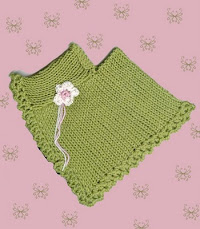
My apologies to those who tried to knit the original midgauge beginner baby ballet sweater and found that the numbers just didn't match up. I revised it back in May for a class for our guild and realized then that I needed to correct some of the math. BUT I forgot to update the blog. Here are the correct instructions:
http://marzipanknits.blogspot.com/2013/07/very-beginner-level-machine-knit-baby.html
Who knows where my head was???? I guess we're all entitled to make a mistake now and then. If you caught the mistake(s), more power to you!
Saturday, September 20, 2014


Monday, September 1, 2014
Shortcuts to Machine Knit Charity Hats

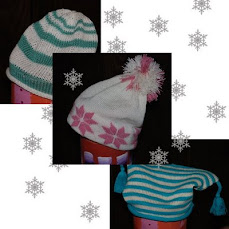
I'm on a roll, trying to get as many charity hats done before the September 23 deadline when we have to turn them in for the Salvation Army. (IT'S SEPTEMBER ALREADY!!!!!!!!!!) I came up with a couple of time savers. You might benefit by them too if you do a lot of charity knitting. I don't think they compromise the looks, so they are working out great for me. Here they are (nothing earth-shaking, just tiny tips):
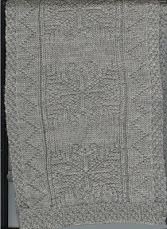
Pardon the pictures........hat is squished under the lid of the scanner and the yarn is softer than it looks........................................
1. I made some cast on rags a few years ago and never used them. Now I am and although they don't save too much time, they save on waste yarn. Just don't forget to use one row of ravel cord or crochet thread before you knit the main yarn or it's curtains for the cast on rag. You'd have to cut it out. Add some claw weights.
2. When you get to the top of the hat and are ready to decrease, with a one-prong tool, put 3 stitches on one needle across the work. Keep the out- of- work needles at the back of the bed so they don't knit and knit two rows. Then take off with your seaming thread. Cinch up tight and seam. It closes up nicely and if it doesn't look perfect, add a little something to the top, like the gender neutral knotted cord.

3. The gender neutral knotted cord doesn't have to be knit as an I cord. Just pull 3-4 needles to work, ewrap on, at tension 2 knit abt 100 rows (for the midgauge), hanging on with one hand as you run the carriage with the other, and bind off. Sew the two yarn ends into the tube that naturally forms, knot both ends, knot the middle and tack on securely. This is twice as fast as the regular I cord because every row knits.
4. Make the hat adjustable for size and age by knitting a large cuff that can either be folded up or down. This adds extra warmth around the ears. The cuff is stretchy enough to accommodate about a 2 inch increase in head circumference. The length of the hat also helps in adapting to different sized heads. Slouchy at first, more fitted later.
If you don't want the cuff so thick, knit 15 rows T5, 15 rows T6, hang a hem and knit the rest of the hat at T 7. Compensate by adding a few inches to the main part of the hat.

Here's the pattern I've been using of late:
YARN Pound of Love Baby Yarn -generously gifted to me by my good friend Sandy--so far 4 hats with enough for 2 or 3 more out of this one skein.
MACHINE: any midgauge, no ribber required
GAUGE: 4.5 st and 7 rows = 1 inch at Tension 7
FINISHED SIZE: 3-6 months 15 inches circumference/8 inches height (12 months 16 inches circumference/8 1/2 inches height, 18 months 17 inches circumference/9 inches height)
Directions
Start with waste yarn or cast on rag with one row of ravel cord over 78 (80, 82) needles. With main yarn (no cast on, just knit) Tension 5, knit 30 rows, Tension 6 knit 30 rows. Hang a hem. Change to Tension 7 and knit 40 (44, 46) rows. Decrease for the top. Transfer using the 3 prong tool and move three stitches over two needles. Knit 2 rows, take off on long piece of yarn, cinch and seam with a mattress stitch. Remove waste yarn or cast on rag. Hide yarn ends, add embellishment cord to the top.
These have been taking me about 15 minutes to knit, 15 minutes to assemble. Try one and see if you like it.
PS----How to make a cast on rag-- any machine. At the left side of the bed, ewrap cast on 2 inches worth of stitches. Hang a claw weight. Knit 2 rows. *Decrease one stitch on the left by transferring the left most needle to the second needle, pull a needle out on the right to increase one, knit 2 rows.* Repeat. Make as long as you like. If you want one that accommodates the whole bed, you might have to remove the rag from the right side and place it on the left and keep going. By just pulling out a needle to increase, you get a loop that you can hang when using it. At the end, bind off. Steam/ kill the strip so it lies flat and is floppy.
Thursday, August 21, 2014
To Wrap, or not to wrap. That is the question
I have been doing some charity knitting lately, mostly ear flap hats. When I make them on the standard gauge machine, I don't wrap the edges of the ear flap because it goes more quickly and the holes are small. They look ok. But when I tried this on the midgauge machine, I got a totally different look. It's not objectionable, could be called a design feature, but wrapping the edges gives a smooth look. Compare these below:

I used my free pattern---- check out the right side of the blog and scroll down. Thought I'd give another option in case you are using that pattern.
Friday, August 15, 2014
Time to Knit!

Clock Cozy
Machine: I used 4.5 Standard (but any could be used)
Gauge: Doesn’t matter as long as you measure what is
needed
Yarn:
Coordinating colors abt the same wt.
You might be looking at it a long time, so use your faves.
Clock: purchased very economically at Target—Clock circumference
31 ½ inches; rim abt 2 ½ inches. Comes
in red, turquoise and black; takes one AA battery.
DIRECTIONS:
Cast on with waste yarn and knit a
few rows. I used 23 stitches, T6. My gauge was roughly 7 st and 10 rows to the
inch.
Knit 29 ½ inches, about one to two inches
shorter than the circumference, alternating colors randomly. It’s important to
make the cozy snug, but not so short that the stitches are stretched and
distorted.

Leave a yarn tail of the main color either at
the beginning or the end of the strip to seam with. Always change colors on the
right side of the bed and knot the old with the new so it doesn’t unravel. This will be on the back of the clock so it
won’t show.
Start and end with the same color
after (at the beginning) and before the
waste yarn (at the end). Measure
frequently while the strip is on the machine, without weights. When it’s the correct size, take off on
several rows of waste yarn.

FINISHING
No need to run in the yarn ends, (except
maybe on your kitchener row, but make sure they are secure. Trim ends to abt 2 inches.
Kitchener stitch the beginning to the
end. Don’t twist the circle. Fit over the clock rim with knots on the back
side and situated so it stays put. The
stockinette naturally rolls, making a nice edge. You can tuck the ends inside the band if they
bother you. I used the non-hook end of a crochet hook to gently urge them into
hiding once the seaming was done and the cozy was placed onto the clock. (Of course, they bothered me!)
Remove waste yarns. I love the color red, so I let part of the
rim of the clock show. A dab of glue here and there wouldn’t hurt if
you’re having trouble getting the cozy to stay put. Actually, once you get the cozy on and hung
on the wall, it’s not going anywhere so it doesn’t have to be fitting so
precisely.
Voila’, an original, funky clock that makes a
statement about how you spend your time!
Some examples I have seen do a single
color chain stitch, crocheted, around the front inside of the circle,
presumably to make it fit better. I
liked mine plain.

I wish I could say that this was my
original idea. I saw it on Ravelry (hand
knit)
Retrobaby
by Inger
Website
Check out the examples on Ravelry for design ideas.
Saturday, August 9, 2014
Mar’s Spherical Dryer Helpers Revisited
I have seen quite a few patterns for hand knitted dryer balls and didn’t find myself attracted to any of them---mostly because they are knit on double pointed needles. They start with just a few stitches and increase every other or every row to get to the middle of the ball. That’s one thing the knitting machine doesn’t do easily. We can knit in the round with the ribber, but sharp, even increases to get a round ball would be difficult, if not impossible. Decreases yes, increases so fast, no.
When one of the gals in my guild did a program on felted knits, she showed some dryer balls she had made. She wound a ball of wool yarn and then needle felted some roving on to it. She felted them in the washing machine inside a nylon stocking. I tried that and had to spend days pulling off little pieces of nylon and lost most of the roving. I evidently missed a trick somewhere. (Ball on the left.) Then I tried just rolling a wool ball and hand sewing down in 7 million places so it wouldn’t unravel. (Ball in the middle.) It works but doesn’t look so elegant and you can see the individual threads. Then I came up with the ball and jacket idea. (Ball on the right.) It fills the bill, as far as I’m concerned .

So, why make these things anyway ???? Some reasons: The balls bounce around in your dryer and pound the clothes taking out wrinkles and static. (No more expensive dryer sheets.) They also reduce the drying time significantly. I usually use 4 at a time. The only downside I can think of is that they are noisy.
Here’s my recipe. A ball and a jacket. Done from middle to end, twice, because decreasing every couple of rows is easy.
Standard ( Midgauge, bulky)
100% Wool yarn that works with your machine. No superwash.
1. Wrap a ball of wool yarn to the size you want. Color shouldn’t matter. Mine are about 4 inches in diameter. Set aside.
2. Cast on over 46 (40, 34) needles with waste yarn. Knit 6 rows. Loosest possible tension throughout.
3. Knit with main yarn 10 (8, 6) rows. (Don’t do a permanent cast on, just knit)
4. Remove on waste yarn and rehang main yarn doubling up stitches across leaving no empty needles, knit 2 rows. Repeat this step until you have 6-8 stitches left. (or use your garter bar if you have one.)
5. Take stitches off on a 10” yarn tail with your double eyed transfer tool. Don’t cinch up yet.
6. Turn around the knitting and pick up the main yarn stitches at the center of the ball, all the way across with purl side facing you. Remove waste yarn now or later. Repeat steps 3, 4 and 5.
7. Slip your ball into your unfinished jacket to see if it’s the right size. Add a little, remove a little until the ball sits snugly into its jacket. Because the "jacket" will shrink, it's better to leave a tad of shrinking room. Now you can cinch up the ends and use one of the yarn tails to seam the ball shut. Hide the yarn tail from the other end into the ball after you cinch up that end.
8. Throw into the wash a time or two until the stitches are obliterated and any dye that wants to run has run its course. (Your yarn may not run at all.) Then into the dryer for many happy tumbles.

I made mine on the LK 150 midgauge with Mary Lou’s Schuss Plus. The white didn’t felt as nicely as the colored yarn. The colored yarn did not run in the wash or the dryer. I admit I had to try a few different combinations of stitches and rows to get a nice round jacket for the ball. (Forget the math! I wouldn’t know where to start.) So, if you’re using a standard or a bulky, you may have to do a little experimenting too.
I’m guessing at the correct number of stitches and rows to get a nice ball for the other two machines. These go so fast once you get the right ratio---they would make nice little stocking stuffers for the people in your life who do the laundry.
OH, and by the way. Don’t be tempted to use acrylic for the ball. The gizmo just won’t work very well.
*********************************************************** Curious and curiouser----- once again, Blogger wouldn't save my post unless I omitted the word "balls" in the title.
Tuesday, June 10, 2014
Machine Knitting Abbreviations
Two people recently asked what the machine knit abbreviations mean. Typically they are listed in most machine knit patterns, but I usually forget to add them to mine. Here is a list of the most common ones used for almost all machine brands. (Passap has its own.) Hope it helps.

Using DAK to print graph paper
Perhaps you seasoned DAK users realized this a long time ago, but it just dawned on me. I wanted to create my own lace patterns to use with my new-ish LK150---hand manipulated lace, of course. There are some really nice projects on Ravelry in the Mid-gauge Machine Knitters group. I'm especially inspired by hookmeup's lace. http://www.ravelry.com/people/HookMeUp Check out his projects.
Anyway, you can use a free program on the internet for creating knitter's graph paper, or use an Excel spreadsheet too. This is just another easy way.

Anyway, you can use a free program on the internet for creating knitter's graph paper, or use an Excel spreadsheet too. This is just another easy way.
I tried using a basic graph and typing in the symbols typically used in hand knitting lace patterns. Probably due to my ignorance, I couldn't get the symbols to print dark enough. So I decided plain graph paper would work fine and I would draw in my own symbols by hand.
Here's how to get some nice graph paper;
1. Open Stitch Designer.
2. Accept the 40 st x 40 row default or add/subtract stitches and rows to suit your purpose.
3. Use the paint bucket to dump white into the work space.
4. Under Options, change your tension to 4 stitches and 5 rows to the inch so that the grid is large. You may be able to control the size of the grid by just adjusting in the print options (#6 below) regardless of the tension your file is set at. Haven't tried it.
5. File...print. Save as graphpaper in a place you can find it again. I have a misc file for that purpose.
6. You have some options--- before actually printing--- under Available Formats. Choose stitch pattern picture, under page setup choose portrait for vertical lace and landscape for horizontal repeats. Choose 100% or larger. You can choose which way the rows and stitches are numbered. I asked for darker color demarcation, but it didn't seem to make a difference when I printed it out different ways.
7. DAK may use several pages to print out what you have specified. I chose the one that made the most sense for the design I planned to do and printed out only that page. (The one starting in the lower right corner for stitches and rows made the most sense to me.) Fianally, click Print. If you don't get exactly what you want, fiddle around with the settings.
Hope this helps someone. I'm going to a knit-in in Princeton on Saturday and wanted a chart for a project I want to try. If it turns out, I'll report.
Subscribe to:
Posts (Atom)


 Posts
Posts