machine knitting midgauge standard bulky machknit knit machine-knit patterns

Monday, June 14, 2021

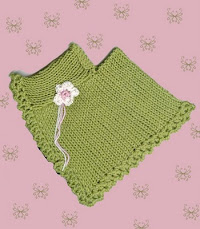
Premie Standard Gauge Machine Knit Ballet Sweater


(Midgauge Baby Ballet can be found on the right side of the blog.  This one is a little shorter.)

 I'm in the process of knitting baby stuff to donate.  This is a super easy one for premies and if it weren't for all the yarn ends would go super fast.  Some suggestions for those pesky things below.

Skill Level:  Beginner 

Machine:  Standard 4.5 mm gauge

                        No ribber needed

Yarn:  Any that knits close to gauge.  My yarn is pretty skinny.

Gauge:  8 stitches and 12 rows to one inch at T7                                                                                                                

            If you want to knit this but your yarn obtains a different gauge, you can do the math.  First, knit a gauge swatch with your yarn.

            Formula:  Pattern’s rows or stitches and DIVIDE them by this pattern’s gauge, then take this figure TIMES the NEW gauge you obtained    (do the same for stitches and rows)


            EXAMPLE

            stitches in the pattern back 44 divided by 8 stitches per inch =5.5

            your gauge ex 4st to an inch x 5.5 = 22 st

            So instead of casting on 44 st, cast on 22

In some cases you will want to round up or down. For increases and decreases, look at the end of the piece and spread out increases or decreases to get to the correct amount.  Fairly easy on this tiny garment, a little trickier on large ones.


Finished size (Just one size)  width of back 5.5”, length  4.5”, sleeve 3.0”  (can be rolled up to make a  little cuff) 


Here are the DAK schematics for the pattern:


            (make one, reverse one)


This is a Designaknit produced pattern.  How to read:

The format is Row # --Decrease or increase so many stitches --every so many rows --So many times.

Example:  On the front, on row 28, decrease one stitch every two rows twice, so you decrease one stitch on row 28, knit 2 rows and decrease again one stitch on row 30.  If it helps, you can write down the in-between row decreases.

Hints – Unfortunately there are a lot of ends to work in.  You can either wait until finishing and work them in or try to weave them in as you go by hanging the end over every other needle before you knit the row.  You can also save some ends by leaving a long one at the bottom of the piece to seam with.  RC stands for row count.

FF means full fashioned.  This is why the front edges don’t roll.  To decrease, move the 4th stitch from the edge to the 3rd, the move all 3 stitches in to fill the empty needle.  To increase, move 3 stitches out one needle, then take the purl bump on an adjacent stitch and hang it on the empty needle so that there is no hole.

DIRECTIONS IN WORDS

*****For all pieces, do the 4 row rolled hem at a tighter tension (T3) then change to T7 and RC000 to start the schematic.*****

Back

With waste yarn, cast on 44 stitches.  Knit several rows at looser tension.

With main yarn ewrap left to right.  Change to T 3.  Knit 4 rows (might be a little tight). 

RC 000 Change to T 7 and knit to RC  29.  Bind off 3 stitches,  knit one row.

On row 30 bind off 3 stitches.  Knit to RC 54.  Take off these stitches in 3 parts. Put all stitches in hold, machine to hold.

For the first shoulder take off 12 stitches on several rows of waste yarn.  Remove from machine.

Bind off the next 30 stitches, decreasing one stitch on the 10th and 20th needle. Remove from machine.

Take machine off hold and take off the last 12 stitches on several rows of waste yarn.  Remove from machine.


Fronts:  Make one and reverse one.

With waste yarn, cast on 42 stitches.  Knit several rows at looser tension.

With main yarn ewrap left to right.  Change to T 3.  Knit 4 rows (might be a little tight). 

RC 000 Change to T 7 and follow the schematics using full fashioned decreases.  On row 30 for right side and 29 for left side (next to carriage) bind off 3 stitches and continue with the other side ff decreases. Knit to RC 54 and take the 12 st off on waste yarn.

Sleeves

With waste yarn, cast on 28 stitches.  Knit several rows at looser tension.

With main yarn ewrap left to right.  Change to T 3.  Knit 4 rows (might be a little tight). 

RC 000 Change to T 7 and knit to RC  17. Increase ff  one stitch both sides.  Knit to RC 34.  Increase ff one stitch both sides.  You now have 32 stitches.  Knit to RC 35 and take off on several rows of waste yarn.

Finishing

Join the shoulder stitches.  Put your carriage on the left.  With the right side of the back piece facing you, hang one set of 12 shoulder stitches.  With the wrong side of one matching front, hang the 12 shoulder stitches. Pull  the needles out and push the knitting to the back so that the stitches knit off properly.  Knit one row and bind off.  (I like to bind off around gate pegs to get the bind offs even.)

Do the same for the other shoulder.


Join the sleeves.  Put your carriage on the left.  With the right side of one sleeve facing you, hang the 32 stitches.  If you hang 16 on the left of zero and 16 on the right, it’s easier to get the seam to come out right.  This is a little tricky.  With the wrong side of the sweater facing you, hang the shoulder seam at zero.  With a 3 prong tool to measure out nicely, pick up  whole stitches from the body.  Skip a stitch of the garment and hang the next 3 stitches.  Try really hard to stick your tool in the same ditch every time.   Looks wonky if you don’t.                                                             

Continue picking up until all sleeve stitches have been attached to the body.  Now take a ruler and measure from the bottom of the sweater to the underarm.  Over on the other side, begin hanging stitches at the same place so that the front and back are not off kilter.  Fill in the stitches until all sleeve stitches are loaded up.


Pull all needles out and push knitting back so that the stitches knit off properly.  Knit one row left to right and bind off.

Do the same on the other side.

TIES  -  You need 4

Pick up 3 stitches at a corner of the garment.  Hang a wt on the garment.  At T 6 Knit 60 rows.  If you want to knit an I cord, push in one part button and knit 120 rows.  Just knitting the tie plain causes it to roll and it’s not too distinguishable from an I cord and goes faster.  Bind off by putting the two outer stitches on the center, cut the yarn and pull through to bind off/ fasten off.

Make 3 more , one at each corner.

SEAM

Mattress stitch the sides and the sleeves.  Run in yarn ends. Wash in detergent that doesn’t have perfume.

Steam a little if you think it’s necessary.

Donate to your favorite hospital or charity.  Might want to put your donation in a plastic bag to keep it clean.


Now I need to come up with a quick boys' pattern.


Sunday, April 25, 2021

Classyhund


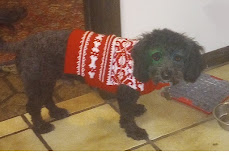
Once again, Ollie is the recipient of my sewing.  Saw the instructions on Youtube for making the bow ties for dogs.  Actually, I saw several examples and picked one that seemed to be easiest.  If you want to make one, check out those videos. Good use of left over scraps of fabric.   I lined the fabric with iron-on stabilizer so it is stiff and stays true to form.   It attaches to his collar so stays on pretty well.

Amazing that he doesn't mind having a dresser.  I would say he's the best dressed dawg in the neighborhood.


Thursday, April 15, 2021

Machine Knit Cotton Hot Pads


I am on a mission to use up some of my huge cotton stash.  Have knit a lot of dishcloths, but thought it would be fun to be a little more creative---and make something useful.  I now have a cache of little gifts on hand.

Here’s how I have done them:

 *Used all cotton yarn and my standard gauge Brother 970 machine.  My designs are approx. a gauge of 7 st and 10 r to the inch, but it doesn’t matter. Mine end up to be between 7 and 9 inches wide by approximately the same height. You could use wool---haven’t tried because I am trying to use up the cotton.  You could also do these with a punch card machine or knit them plain.  But , where’s the fun in plain???

*Start with several rows of waste yarn with a quick cast on.  Engage the design with your electronics, then just knit not doing a permanent cast on with main yarn.  I tried to be sure to do the design so that the carriage ends at the right side when adding contrast yarn. The designs are knit in one longish rectangle.  Might want to switch between KC I and KC II for some rows so you don’t have a contrast yarn going all the way across the knitting for no good reason.  When the design is done, the bottom row is seamed to the top row.

* Some of your designs may have long floats.  Not to worry.  They add to the insulation factor.  I had no trouble with the stitches not conforming to one another or splitting between stitches, but if you do have this issue you can latch up the long float to a matching color. No one sees the inside.

* You may wonder why you need more rows in the middle of a design when both bottom and top halves are the same.  I found out the hard way that you need about 4 rows to go around the “bend” when you seam bottom to top or it’s off.  If you only want to do the bottom half of the design, that’s fine.  Just remember to do the same rows as the design and add 4 extra rows.  Example—the design is 86 rows.  Knit the 86, do 4 rows plain, knit 86 rows plain.

*Adding a loop in the corner is optional.  I did about 6 stitches x 50-60 rows, plain knitting since it curls like I cord anyway.  Looks nice if you hang the front corner with wrong side facing, knit the loop, then pick up stitches from the back side, knit a row and bind off.  When you seam the sides you can hide the purl bumps.

* To seam bottom to top, you have two options:

              -The Perfectionist option is to take the piece off on waste yarn when the design is complete, turn it so the right side is facing you, hang bottom to top stitches.  Then bind off. The seam will be on the inside and not show.

              -The quicker, easier way is to hang the beginning stitches onto the top stitches when the piece is complete, then bind off around the gate pegs.  You will have a seam on the right side.  I think it looks ok. On one I ran out of main yarn right when I needed ONE MORE ROW!  So I used the contrast yarn to bind off.  So one row was main and one contrast.  I actually liked it--- it created a decorative stitch.

* Options for insulation for the middle of the hot pad--- I have used layers of insulbright, >1 layer of flannel cotton fabric (laundered first),  knitted squares of cotton yarn I didn’t like, old cotton cut to size swatches, machine sewed around edges so they wouldn’t unravel, cotton quilting batting, old clean towels.  After completing the knitting, I turned it wrong side out, then tacked the lining to the outer in several places, so it wouldn’t shift.  I used regular matching cotton sewing thread. Doesn’t show if you take tiny stitches.  When you are sure the lining won’t shift, turn right side out.

 * Finally, remove waste yarn and mattress stitch the side seams by hand with right side showing.


I used patterns that I have had in DAK for ages, some are built-in patterns, some are purchased—lots of Dale of Norway patterns.

Some examples-----------Have knitted abt 15 so far.  Addictive. Can you tell I love Norwegian designs??? 


I plan to tell a recipient to hand wash cold, dry flat.  I don't want them (the hotpads) to shrink and pucker up. 😊

My absolute favorite is the rosemaling design.  It was a free chart on the Dale of Norway site.  I converted the chart to a DAK file.  If you would like to have it, write to me.  I don't know how to attach a file here with Blogger.  If someone knows how, would like to be enlightened.

Wednesday, March 10, 2021

Cotton Pullover for Grandson

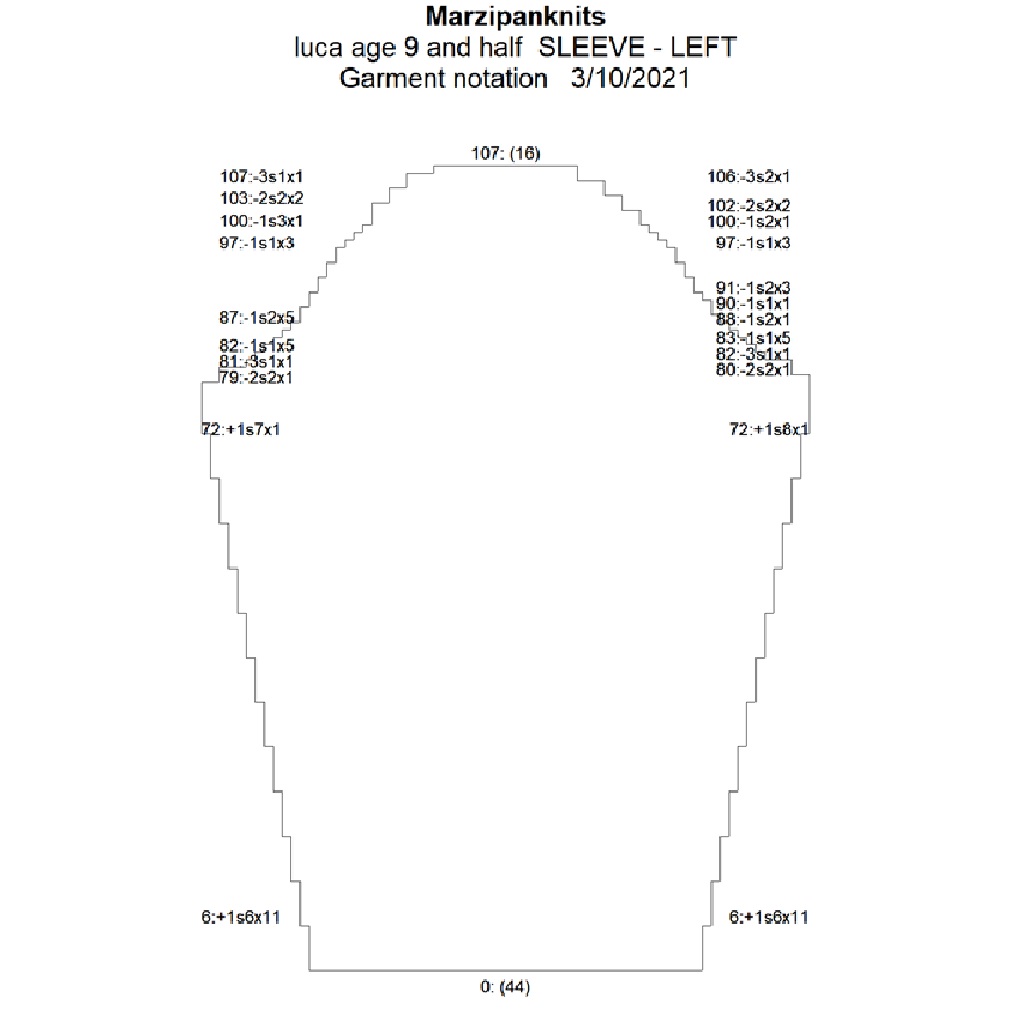
Finally got over my funk a little bit and did some knitting.  Never contracted the carona virus and did get both of my Pfizer vaccinations.  Dont' know what has been the problem.  Hope to shape up and knit and post some more stuff.  As always the picture doesn't do it justice.  Really does look better in person. Weird dark shadowy rainy day today affecting the photo.  The armhole decreases really are the same.

Just in case you have a 8-9-10 year old to knit for, here is a pattern  you could use. Write to me if you can use the Designaknit file and I'll email it to you.  Otherwise, you can follow the directions below.

Pullover for Luca age 9


Midgauge (SR 860 + ribber)

 by Mar Heck  3-9-21

Notes:

*  Used Conshohocken cotton yarn---has a core that is roving-like with a stronger thread wrapped around.  Shrinks terribly so I knit two gigantic rectangles, guessed that it would be enough yarn to knit the sweater, washed in hot water and dried in dryer.  Then re-wound onto cones.  Should be sufficiently pre-shrunk.  Had to clean a lot of fluff out of the dryer!!! It’s really soft, one positive thing to say about it.

* Sweater is a size 10 as measured by store-bought boys’ sweater.

* Gauge for main pieces is 5 st and 6 rows to one inch at T6

* T 3/3 for ribbing. 

^sleeves 22 rows

^ front and back bottom ribbing 8 rows

^ neck 10 rows

Transferred rib stitches to main bed and knit right to left with one row T 8 for loop through loop bind off.


* DAK shape file is for the pieces not including ribbing.


* Start with waste yarn and ravel cord for all 4 pieces.  When done, turn the piece upside down and do the ribbing.  Bind off for the cotton yarn was nicer than the cast on.  First used a bind off around the gate pegs and it flared too much.  Loop through loop looks better.


*  Neck is big because L wants to wear a cotton T shirt underneath and doesn’t like tight necks.  Can be adjusted.


* Neck was done with FF decreases one side at a time rather than short rowing.  First time doing neck this way and I like it.  Easier to do with this machine than short rowing.  Needles kept popping into work when short rowing, frustrating the heck out of me.  Blue air.  Maybe need a new sponge bar???????


* This yarn is hard to work with since it has NO stretch.  Next time will use an easier-to-work- with yarn.


Now….what to do with all this extra pre-shrunk yarn?????


Sorry the numbers are a bit blurry.  I can't seem to copy them so they show up well.

Wednesday, October 7, 2020

Easy Machine Knit Pillow Project

 Too much time on the computer, too many movies, and too much political stuff makes for an odd existence these days.  Can't seem to concentrate on anything too complicated, so I decided to use up some of my nice Brown Sheep wool and make some pillows for one of my couches.  I hadn't used too many of the built-in patterns on my 970, usually preferring to do my own thing. Can't erase them from the CB1 so why not give some of them a try?  So here goes my easy project:


The picture makes them look like they are different sizes.  They really are all the same.  It's the angle I took the picture from, I guess.  The 3 in the middle are from the 970 (maybe also other Brother models ?) and the 2 end ones were downloaded from an old DAK file I had.  I wanted to make them approximately 17" x 17" so at T 10 I cast on 120 stitches and knit 300 rows.  My gauge was 7 stitches and 9 rows to the inch. If you want to make some to your specifications, you'll want to figure out your gauge with the yarn you plan to use.  Close is probably good enough for this project.

 I also sewed a cotton fabric lining for each and used the lining to stuff  with the poly fiber fill.  Didn't want the filling to work its way out of the knitting.  After sewing the lining shut I folded the knitting over it and seamed the sides and bottom.  Couldn't be much easier.  Hope they won't ever need to be laundered in my lifetime...

Monday, September 28, 2020

Baby Elf Hat on the standard gauge machine


I wanted to give this hat pattern a Norwegian name.  So, I tried the Google translation service  for English to Norwegian and here are some suggestions.  Not sure which would be most true.


Maybe a Norwegian speaking person could help me out.

Anyway, here’s my first attempt at a 3-6 month hat.  Pretty cute. The size seems ok, but I don’t have a baby to try it on. So this is my best guess. Will be donated, so size isn’t crucial right now. Finished dimensions (including ribs) are width at tip 6”, width above ribbing 5”, top to bottom of the neck 6”.

Yarn: from my stash, acrylic. Use something that gets close to this gauge. Mine had no label.

Machine:  standard gauge with ribber

Gauge for stockinette:  31 st = 4” and 37 rows = 4”  @T 7.  Kinda weird, I know but close is ok I would think. 

Directions:

Overview… (knit from front of face to back of head)

1.     75 needles 1 x 1 rib.  Do Susan Gualiumi’s nifty cast on for rib.  My new bestie because it lies perfectly flat, no flare, but is still stretchy.

 Use the manual’s cast on with waste yarn, (zig zag row) insert rib comb, add one barrel weight in the middle,  do 3 rows circular, cancel circular and knit about 1” of rib with this waste yarn.  Tension doesn’t matter so much here. Change back to circular and k the last 2 rows with ravel cord.  Snip waste yarn and ravel cord. It’s ok if you forget to switch to ravel cord, but it’s harder to remove at the end than it is when you use ravel cord. 

2.     Main part.  With main yarn, T6/6 do the manual’s cast on again and knit  12 rows ribbing.

3.    Change to regular sinker plate and transfer rib stitches to main bed.  Knit stockinette at T7 to RC 38, which should be about  5”.

4.    Begin short rowing so that you get the elvish point at the back of the head. Important to weight the knitting so the stitches don't pop off.  Set machine to hold.   *CAR put 7 N in hold at the left of the knitting. Knit across, wrap the end st so you don’t get a hole.  Put 7 needles on right in hold.  Knit across to the right and wrap the end st.* Continue from * to * until you have 5 stitches left in work.  Put 2 in hold, knit across and wrap, put two on right in hold, knit to the right. 

5.    Put all stitches back in work (or just undo the hold setting) and knit 2 rows.  Bind off.

6.     Stitch the back of the head seam by hand.

7.    Bottom neck ribbing.  With the wrong side of the knitting facing you, stretch out the bottom of the hat to pick up 70 stitches.  Try to pick up in the ditch between stitches at the same place across.  Knit 2 rows stockinette at T 10.

8.    Change sinker plate to rib, transfer every other stitch to ribber.  At T 6/6, rib 12 rows.  Transfer rib stitches to main bed and bind off with your favorite bind off technique.  On this one I did around the gate pegs. 

9.    I cord Straps:  I know some object to ties, but many babies do live after having had their hats tied under their chins, so I’m going with it.  If you have another method, have at it.

Pick up 4 stitches at the bottom corner of one front.  Set carriage to slip one way, knit the other.  (Brother, one part button.) At T 9 knit 150 rows and bind off.  Same for other side.  Hide yarn ends and tie a knot at the ends of the ties.

Remove the waste yarn.  There are a few yarn ends to hide. I did not steam the hat to block it, but you may want to.

Notes: You may also want to add a tassel or a pompom to the point of the hat and to the I cord ends.  A fairisle pattern would be nice too.  Because the seam at the back of the head can be bulky, next time I will take the top off on waste yarn and kitchener stitch the seam shut. This is an easy knit and a good way to practice short rowing if you are not used to doing that technique.  I wouldn't say this is a fast knit because of the transfers between beds, but worth it, I think. If you don't have a ribber, a hung hem would do.

Thursday, September 10, 2020

Educats and Edudogs

 Thank you for the interest in the Educat and Edudog blanket patterns.  They are available for purchase using PayPal for $10.00 each.  My label there is marsmachineknitting.  You need to have DAK (any version) and an electronic machine to download to.  I do also have a hand knitting version.

The blanket is lined as you go and the edges are bound with multi-color Icord. I have made mine with acrylic so they would be easily washable.  Any yarn that works with your machine is ok as long as the different colors are the same weight.  I think the blanket would be ok to do on a garter carriage for the front, although I personally don't have the patience.  The idea is like an "I spy" quilt where you have the child find the cat who is sad or the dog that looks like Harry Potter, etc.

If you wish to purchase, just email me with the address you'd like the pattern to be emailed to and I will send you an invoice.

Thanks again.  If questions, just email me.